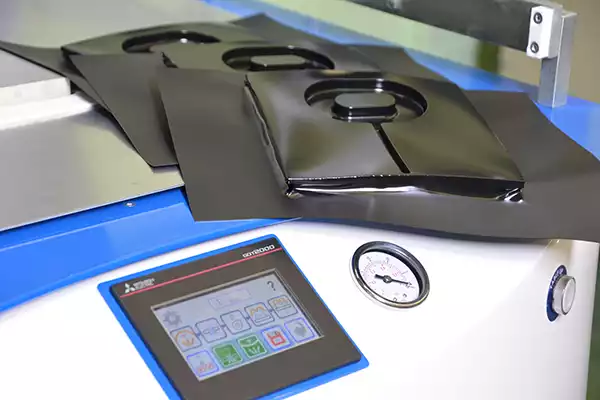
Uses for RF Heat Sealing
June 18th, 2013 | Radio Frequency Welding Service, RF Welding Services, RFW ServiceIf you’re in the business of manufacturing, you may have experience with radiofrequency, or RF, heat sealing. If you’re not familiar with the process, it involves sealing two pieces of material together using electromagnetic energy and pressure. The resulting seam is strong, and is air, gas, and water tight, making RF sealing an ideal solution when a durable seam is needed on flexible materials. So what are some of the more common uses for such a process?
Medical Applications
RF sealing is used extensively in the medical industry. IV bags are an ideal product for the process, as the contents of IV bags need to stay protected from outside elements that could compromise the integrity and sterility of what’s in the bag.
Automotive Uses
Car wash curtains and wash bay enclosures are also commonly fabricated with heat or radio frequency sealing. Since PVC is a material that handles RF heat sealing particularly well, manufacturers will use it to create a product that is strong and durable. RF sealing provides flexibility to manufacture many types of enclosures used in an auto body work shop.
Protective Covers
Protective covers are one way to protect expensive equipment from the outdoor elements. Using heat seal services and heavy sewing, a form fitted custom protective cover is not only waterproof, but is strong enough to endure harsh weather conditions.
As you can see, the applications for RF heat sealing are many. Plenty of industries use this process—does yours?
Posted by adminRadio Frequency Dual Phase Welding Process
June 13th, 2013 | HF Sealing, RF Sealing, Radio Frequency Sealing, RF Welding ServicesRadio Frequency Dual Phase Welding is used in manufacturing for the fabrication of large and odd shaped flexible, inflatable products. Typically these products have inflatable properties that require an impenetrable, leak proof seal necessary in the function of the product.
An example of a successful dual phase radio frequency weld is to render an air tight tube weld, similar to, or the same as, an intravenous bag used in the medical industry. The advantage of dual phase radio frequency tube welding is that all of the components are positioned / indexed only once.
This speeds up the manufacturing process and eliminates the possibility of incorrect alignment of the pieces to be welded together. Dual phase rf welding also provides flexibility in the size, proportion, position and type of leak free seal that is needed for a product to function properly.
When to use dual phase welding is determined when the product design and material choices have been made. Dual phase rf weldinghas dielectric properties and works well for fabricating large and odd shaped products using flexible materials such as PVC, PU, EVA and coated fabrics. The weld is incorporated using pressure with precision for tight tolerances. This automation of production reduces / eliminates die misalignments and maintains consistency in manufacturing of a leak proof seal for the product.
Dual phase or single phase radio frequency welding are low cost methods that provide excellent bond strength. The localized heating works well on thick or thin materials and produces a clean, impenetrable seam designed for durability and long lasting results.
If you have a ‘tube’ rf welding project currently in the development phase, you may want to first inquire about the best heat sealing method to use for the fabrication of your product. It will save you time to market if you better understand which heat seal is appropriate to provide successful results.
Prototypes
FabraCraft provides soft tooling for the fabrication of prototypes for new products. Soft tooling is a low cost, limited use type of radio frequency welding tooling. Typically close to one third the cost of production tooling, soft RF tooling can give you the opportunity to ‘product test’ prior to manufacturing larger runs of your product.
If radio frequency welding soft tooling is a consideration for your product, do not hesitate to ask one of our technical assistance representatives for some informed input.
Posted by amcraft
Why You Should Use Radio Frequency Welding
June 4th, 2013 | Radio Frequency Welding Service, RF Welding Services, RFW ServiceNo matter the industry in which they’re used, air tight and water tight seals have to be perfect. Any time you are unhappy with sealed products, either because of failing to meet EPA standards or because they aren’t resisting damage, it might be time to take advantage of the excellent technology behind radio frequency welding. Also known as dielectric sealing, this is a process that can be used for many products that require protection against contamination, whether it’s aircraft, medical or manufacturing needs that require a strong, impenetrable bond to containing dust, air, gas and fluids.
Use for Almost Any Application
RF welding is a process that can bind a large variety of material types including pvc vinyl and coated fabrics. A radio frequency welding company can seal edges on tarps and inflatable products which include die cutting and other applications for its completion. The right RF welding company will help you design and determine what material works best for your application, based on the size and use requirements, along with the amount of protection you’ll need to limit contamination.
It’s Proven to be Reliable
Through the use of dielectric sealing, materials can be protected from wear and tear and can be free of contamination, all thanks to the simple fact that this process creates a bond stronger than the original material. At the same time, flexibility of all materials is maintained, forming both durable and strong products. IV bags, industrial curtains, and air containment bladders are simply some of the products manufactured that rely on heat sealing for strong and durable sealed edges.
Pressure Resistance
When radio frequency welding companies manufacture products, the bonding technique that forms a seal needs to be as pressure resistant as possible.This is why rf welding is preferred as much for water applications as it is for dry ones. Inflatable bladders manufactured using dielectric sealing will maintain air pressure while in the water, never popping or tearing. Even in tougher waters, you can be guaranteed that the bond is strong enough to prevent punctures and rips of all kinds.
Controlled Temperatures
Certain industries such as medical and manufacturing require a constant temperature for expensive equipment to be kept cooled for top performance. Radio frequency welding is used to create enclosures that will prevent any conditioned air from escaping, and keeps contaminants and other possible influences out. When rf welding companies utilize airtight dielectric sealing, you can trust that all of it is manufactured for top quality performance and long lasting wear.
Posted by adminRadio Frequency Welding Helps Protect Against Contaminants
May 28th, 2013 | Radio Frequency Welding Service, RF Welding Services, RFW ServiceNot only do you help protect yourself, customers and workers from contamination, but your equipment can also function better, allowing you to save money typically spent on the repair of damaged equipment. Protective covers fabricated using radio frequency welding are reliable and provide a protective barrier to a variety of contaminants, including dust, chemicals and bacteria. RF welding is a custom fabrication process that results in durable and strong leak proof bonds that resists tears and lasts longer. Here are some great uses for radio frequency welding that Amcraft can manufacture.
IV Bags
When patients require IV feeds, they must receive the best care available to them. When IV bags are manufactured with bonds made through radio frequency welding, the seal is impenetrable, which prevents contaminants from affecting blood transfusions, potassium drips, or glucose solutions. The edges of the bags are perfectly heat sealed, forming an air tight and leak proof IV bag.
Containment Rooms
If you require protection in a clean room environment and to protect expensive equipment, dielectric sealing can be used to create the perfect containment enclosure, or clean room. This type of sealing bond is virtually impossible for contaminants to penetrate, the air tight seals are flexible and tough. A clean room can be fabricated to create a large enclosure where the air is contained, generally having its own air filtration and temperature control solution.
Industrial Curtains
Facilities greatly benefit from utilizing industrial curtains to keep out dust and other sources of contamination. You can discuss the installation of industrial curtains for your facility with a specialist, and figure out what materials will work best depending on the facility’s type and size. Material choice also depends on how much flexibility is needed and whether liquid or solid contaminants present a risk. The RF welding process can make any industrial curtain work flawlessly for you.
PCA Hoses
Since PCA hoses are meant to be flexible for bending and other manipulation, you should have heat sealed edges that are guaranteed not to allow leakage or damage to occur. Heat sealing keeps all of your PCA hoses from tearing at the seams, preventing air from leaking out and contaminants from entering to damage the integrity of the PCA hose. This heat sealing process also offers sturdy protection to the outdoor environment for long lasting and durable wear.
Posted by adminEmbellishing Your Products
February 22nd, 2013 | HF Sealing, RF Sealing, Radio Frequency Sealing, RF Welding ServicesRF welding companies have to be versatile in their synthetic sealing skill set, because many products made out of vinyl and other synthetics aren’t as simple as they may first appear. From everyday consumer products to specialty applications, heat sealing services don’t always just conjoin two flat, malleable synthetics to one another. They may be implementing embellishments that are the very heart of the final product’s usefulness, and without which the product would be incomplete.
Inflatables and Nozzles
Inflatable products don’t just require the airtight seals provided by RF welding and heat sealing services—they need a way to inflate. When RF welding companies integrate nozzles for inflatable devices, they face the challenge of joining a malleable synthetic fabric to a hard plastic nozzle or opening without compromising either one. Nozzles come in all shapes, sizes and types, meaning that the manufacturer has to be versatile and equipped to handle a variety of challenges related to inflatable products.
Hanging Holes
Even when working with flat, sheet-like products, RF welding companies must be able to add uniform holes to a product from which it can hang, albeit without compromising the strength and durability of the product. For example, heat sealing services are used to make auto body shop curtains, welding curtains, clean room curtains and industrial curtains that must effectively contain contaminants. Similarly, heavy tennis court backdrops must be able to hang from the ceiling or from a frame. Any type of curtain needs holes from which it can hang, but if these are integrated haphazardly, it compromises the strength of the product and can lead to stretching and tearing.
Zippers and Doors
Some vinyl and synthetic products don’t always stay in one piece—they open and close using carefully constructed doors and zippers that the manufacturer integrates with the design. If these elements are incorporated carefully, they give the user a sense of security that comes only with impenetrable design. For example, a synthetic bag that opens with a zipper can still be made with a seal airtight enough to submerge the bag underwater without getting any leakage.
Posted by adminSeals Strong Enough for the Military
February 18th, 2013 | HF Sealing, RF Sealing, Radio Frequency Sealing, RF Welding ServicesImprecise, impermanent methods of forging pvc and synthetic fabrics can’t be relied upon—especially in high-stakes applications. That’s why the U.S. military relies on strong executions of methods like RF welding and heat sealing services for their sealed synthetic materials. The life-or-death scenarios faced regularly by members of the military necessitate materials that were crafted with care and can be depended on even when seriously put to the test.
RF Welding and Airtight Enclosures
When you utilize methods like RF welding and heat sealing fabric, you ensure the type of airtight seal that the military trusts. These methods are used for making enclosures that alternatively prevent water and contaminants from getting in and keep liquids contained inside from leaking out. For example, you can create a bag for transporting weapons so airtight that it can be completely submersed without allowing in the water that could ruin its contents. Conversely, malleable fabric bags may be used for transporting water and fuel safely without the risk of leakage or contamination.
Heat Sealing Fabric for Chemical Protection
The military works with a variety of potentially dangerous chemicals and biohazards, but synthetic materials forged using heat sealing services make the work significantly safer. For example, when you create synthetic HAZMAT pillow tanks by heat sealing the fabric, your seals are airtight, and prevent potentially harmful chemicals from affecting the handler. This security carries over to other materials that are crucial for working with chemicals in the field, like synthetic clean room curtains that are easy to transport and set up on short notice.
Aircraft Hoses for the Military
When an airplane is on the ground, it relies on a continuous supply of conditioned air to cool the interior—otherwise, temperatures can reach highs that threaten the equipment and supplies on board. Heat-sealed aircraft hoses pump air into the plane to prevent any temperature-related malfunctions from compromising the integrity of the equipment. While this is a necessary procedure for any aircraft, uniquely equipped military planes require pre-conditioned air even more. For that reason, the military has specific regulations regarding the materials that they use, and not all manufacturers are equipped to supply these specialty hoses.
Our government issued products are manufactured to government standards using military specified materials. Our cage code is 3DFY6.
Posted by admin
Combining Precision and Speed
February 14th, 2013 | HF Sealing, RF Sealing, Radio Frequency Sealing, RF Welding ServicesWhen working with vinyl and synthetic fabric products, manufacturers must be able to work both quickly and precisely. Some products may require hundreds of feet of hot wedge sealing, while others need the careful fusion of just a few inches of fabric. Unless your manufacturer is experienced in the varying methods of vinyl and synthetic fabric sealing, they may not be well-equipped to handle your needs.
Different Types of Sealing
There are different methods of sealing two pvc or pieces of synthetic fabric together. For example, hot wedge sealing involves pressing a heated tool, or wedge, against the two pieces of fabric that you’re conjoining. The heat of the tool partially melts the fabrics, which join together in a perfectly-fused seal. It is often used for three-dimensional products. In contrast, hot air sealing uses a concentrated, heated blast of air to meld and join the fabrics, and can only fuse two pieces together at a time.
RF Welding and Smaller Applications
Radio frequency welding, or RF welding, utilizes electromagnetic waves to rearrange the molecules of synthetic fabrics and join them together. It is a permanent, precision bond that creates a fabric stronger that the two fabrics from which it is made. This process is fast and precise to the point of near-automation, allowing manufacturers to work quickly to produce uniform products of varying sizes. Like RF welding, hot wedge sealing is also useful for small applications, because the direct contact of the tool gives the manufacturer a great level of control over the process.
Bigger Applications
While heat sealing projects both large and small require precision and accuracy, the unique speed of certain manufacturing processes makes them better equipped for creating large-scale products. For example, hot air sealing and hot wedge welding are both particularly well-suited for connecting large sections of fabrics—for example, these methods may be used for larger projects like liquid storage pillow tanks, tennis court backdrops or synthetic industrial curtains. These processes are able to produce flawless, uniform seals on a large scale without taking up the same amount of time as other sealing methods.
Posted by adminRF Welding in Your Everyday Life
February 8th, 2013 | HF Sealing, RF Sealing, Radio Frequency Sealing, RF Welding ServicesRF welding, heat sealing and other synthetic manufacturing processes may seem complex, but they are responsible for products that you use on a daily basis—perhaps without ever realizing where they came from. From the materials used for military or business applications to the construction of recreational products used for fun, RF welding and heat sealing fabric gives you the strength and security you depend on all the time.
Heat Sealing Fabric in the Autobody Shop
Curtains that hang in an auto body shop are forged out of different vinyl materials by heat sealing pvc for a permanent bond. Similarly, the curtains in a wash bay are created using the same techniques, to create an enclosed, safe environment by preventing debris to contaminate inside an area and prevent odors and vapors from escaping into the shop.
RF Welding and Recreational Products
If you participate in certain sports, you see synthetic products made with heat sealing and RF welding all the time. For example, the heavy duty backdrops of an indoor tennis court are made using these and other processes, creating a bond strong enough to hold up the massive, heavy walls that withstand blows from fast-moving balls. Inflatable recreational products are also made using processes like these, because they create a perfectly airtight seal that stays strong even during vigorous use.
Posted by adminHow Hot Wedge Welding Works
February 5th, 2013 | HF Sealing, RF Sealing, Radio Frequency Sealing, RF Welding ServicesThere are different ways of joining industrial fabrics, each with their own advantages and disadvantages. For example, industrial sewing methods have long been practiced with everything from flexible PVC vinyls, coated fabrics and canvas to leather. Solvents and glues are other products that can be used to bond two pieces of material together. None of these processes are quite the same as hot wedge sealing, though—this process uses the manipulation of temperature and the careful application of pressure to bond two pieces of material.
Hot Air Welding
While hot wedge sealing is related to hot air welding services, the two are slightly different. During the hot air welding process, compressed air is blown across heated elements and then injected where the weld is to take place. Think of the can of compressed air that you use to spray out your computer keyboard—when you blow the air, it comes out in a fine, precise stream. If that air were heated to hundreds of degrees Fahrenheit, or even over 1000 degrees, it would be hot enough to weld two pieces of coated fabric together.
How Hot Wedge Sealing is Different
Like hot air welding, hot wedge sealing uses the precise application of extreme heat to conjoin industrial fabrics. Instead of blowing hot air onto the materials, though, a heated wedge makes actual physical contact. The wedge is heated to a temperature comparable to the temperature of the air in a hot air weld, and is then put into position at the weld point. When the fabric and wedge finally touch at the weld point, the high heat of the wedge causes the two fabrics to seal to one another.
Hot wedge welding services are sometimes considered to be more precise than hot air welding. In addition to this, hot wedge welding is regarded for its speed, making it a common choice for large and three-dimensional welding projects such as portable storage tanks for water, fuel storage cells, pneumatic pillows and containment bags for air, liquid and gas. That considered, all welding services are determined on a case-by-case basis, depending on factors like the product, the fabric used, the quantity and the application. All processes, however, are airtight, watertight and completely permanent.
Our government issued products are manufactured to government standards using military specified materials. Our cage code is 3DFY6.
Posted by adminDifferent Heat Sealing Processes
January 29th, 2013 | Radio Frequency Welding Service, RF Welding Services, RFW ServiceHeat sealing fabric is a fast, safe and effective method for forming an irreversible bond. Because it is such a reliably strong way of bonding industrial fabrics, it’s used not only in consumer applications, but also making products and tools for the health care industry and the military. Depending on the product you need, one of several types of heat sealing is the best fit, so knowing a little bit about their differences helps.
RF Welding
Also known as radio frequency welding, this uncommonly strong form of industrial fabric welding doesn’t just heat flexible materials to meld them together—it alters their physical structure at a molecular level. This process uses radio frequency waves to shake up the molecular structure of the material such as PVC vinyl and coated fabrics, and when they put themselves back together, they become irreversibly intertwined. Like two colors of paint mixed together, the two fabrics cannot become separated. The new bond is as strong, or stronger than the original material.
Hot Air Sealing Service
The application of hot air is a heat sealing service that uses heated compressed air to join two fabrics. Think of what would happen to two pieces of cellophane left on a radiator—they would melt and join with each other, and when they cooled, they would be one piece. This is the theory behind hot air sealing, though this process is much more refined. Compressed air is targeted at a weld point, and as it is released, it passes over heat sources that heat the air. When it hits the fabric, then, it is hot enough to seal the fabrics together yet accurate enough to make a precise seal.
Hot Wedge Welding Service
Hot wedge sealing is a similar process, but one that is faster and even more precise. Instead of blowing hot air, this process heats a wedge-shaped tool that is then pressed against the fabric, heating and conjoining it. Once the equipment is set up, the hot wedge machine moves quickly, enabling it to create long, precise seals in relatively little time. This process is used to make long seams on large flexible products.
Solvent Bonding
Unlike applications that use heat to bond fabrics, solvent bonding uses chemicals. Unlike conventional consumer solvents like glue that just create a sticky bond, though, industrial solvent bonding uses chemicals that actually dissolve the surface of the material being bonded. Dissolving is simply the destabilization and degeneration of molecules, so as the materials dissolve from the solvent, they are joined together. The remaining molecules restructure around each other, and like interlocking fingers, are rearranged in such a way that they won’t come apart.
Our government issued products are manufactured to government standards using military specified materials. Our cage code is 3DFY6.
Posted by adminRadio Frequency Welding: Solutions for Any Industry
January 22nd, 2013 | Radio Frequency Welding Service, RF Welding Services, RFW ServiceMost industries benefit from radio frequency welding, or RF welding, every single day. Whether we’re bonding polyurethane or heat sealing fabric, the heat sealing services we put to work at AmCraft Manufacturing leave their mark all over the world, in products both commonplace and obscure.
Heavy Duty Backdrops
Mobile, impermanent backdrops can’t be made using flimsy tarpaulin or panels that separate. They need to be strong and heavy enough to stay in one place and withstand elemental distress like tennis balls. Thanks to radio frequency welding, we’re able to not only make backdrops this heavy, but also to make them in one piece. The heat sealing techniques used to manufacture massive, single-piece walls ensure that they stay strong, protecting people inside and out.
Leak-Proof Bags
RF welding is one of the most reliable methods of heat sealing polymers to create leak-proof, airtight containers. When it joins two pieces of material, the bond itself is stronger than either of the materials from which it’s made. Because of this strength, the potential applications for heat sealing services of this type include everything from fluid bags for the medical industry to inflatable bladders for floatation devices.
Radio Frequency Welding for Curtains
Industrial curtains need to be strong, safe and adherent to safety regulations. Radio frequency sealing provides that security, enabling us to create industrial curtains for over half a dozen different applications, including auto body shops, warehouses, vehicle wash bays and hazmat-safe clean rooms. The impenetrable bond of this type of heat sealing services, along with its practicality for a wide variety of polymer materials, makes it suitable for forging curtains that can contain vapors, block out air particulates, resist mold and accommodate different types of air filtration systems.
See if radio frequency welding is right for your industry’s needs—contact us today.
Posted by adminThe Versatility of Synthetic Polymers
January 15th, 2013 | Welding Fabrication Companies, Radio Frequency Welder, Rf Welderecause of its malleability and weight, synthetic polymers such as vinyl can go places and do things that other industrial materials simply cannot. And while you may not want to build a skyscraper out of polyurethane, you can make the seals in it just as impenetrable as the seals in other construction materials—and it’s all thanks to heat sealing methods like radio frequency welding.
Radio Frequency Welding for Customizability
Materials like nylon, vinyl and other synthetics are impermanent when manufactured with a heat sealing process like RF welding, they have versatile strength. For example, look at the removable walls like the tennis court backdrops we manufacture. These single-piece backdrops are strong enough to stop tennis balls and heavy and thick enough for us to equip them with features like doors and windows. Unlike permanent walls, these backdrops can also be taken down or rearranged to suit the needs of the environment. That way, if you only need to separate your indoor tennis courts temporarily, you can do so with ease while maintaining the freedom to remove your walls down the line and at no additional expense.
Transportability
Compared to building materials like steel, wood and drywall, materials like cloth-backed vinyl and nylon are lightweight and relatively easy to manipulate. A pvc vinyl curtain, for example, can be treated to block airborne particulates as well as any glass window, but it can also come down and be folded up. A waterproof tarp can protect expensive outdoor equipment from wind, rain and snow.Sheet-based applications like these are more complex than they seem, though, because we create them using RF welding. This type of heat sealing creates a bond strong enough to completely prevent air and fluid leaks, without sacrificing the transportability of the materials.
Shrinkability
Unlike other industrial materials, materials like rubber and polyurethane shrink and expand in an instant, affording you the freedom to condense your products for travel or storage and use them at a moment’s notice. One of the best examples of this power is the inflatable life raft. Ideally, one of these rafts never has to be used—in its deflated state, a life raft takes up relatively little space. In the event that someone needs it, though, it easily unfurls and inflates, expanding to its full size in relatively little time. And because it was manufactured using RF welding, you have the peace of mind that no air will escape and no water will leak in. We don’t make these types of products.
To learn which materials are best for your project, and how radio frequency welding can help, contact us today.
Posted by adminRadio Frequency Sealing for Life-Saving Strength
January 8th, 2013 | HF Sealing, RF Sealing, Radio Frequency Sealing, RF Welding ServicesIn the flexible welding industry, radio frequency (RF) heat sealing has been a go-to method since the 1940s—and with good reason. As one of the fastest, strongest and most consistent techniques in practice today, RF sealing allows us to create military-grade products for everyone from the average consumer to the federal government.
Strength the Military Trusts
When lives are in the balance, the military knows that it can’t trust anything but the best and most reliable sealed plastics. When we create products for the military using radio frequency sealing, we ensure that every seam is completely airtight and sufficiently strong. The bags we create using this time-tested method are strong enough for transporting weapons underwater, holding volatile air, gas and fuels and forming weatherproof seals around valuable equipment of all shapes and sizes.
Backbone of the Health Care Industry
When polymers are bonded using RF heat sealing, they are stronger than ever before, creating a seal so impenetrable, it’s a staple of the health care industry. Virtually anyone that has been to a hospital has encountered products manufactured with RF sealing processes, whether it be an IV bag containing life-saving medicines, a drainage bag that traps and contains dangerous waste or a clean room wall protecting patients from airborne particles.
Protecting Industrial Workers
Workers that deal with dangerous chemicals, whether airborne, liquid or dry, shouldn’t have to worry about their protective materials failing them—and when they use products bonded with RF sealing technology, they don’t have to. The curtains we make at AmCraft Manufacturing are hazmat-safe, so when a company needs to create a space that is impervious to atmospheric interference, an RF-bonded product is what they use. Curtains like these are able to prevent anything from getting in or out, and can be hooked up to air filtration systems that keep the environment safe and sealed for people on either side.
Learn more about industrial curtain walls and other products made using RF heat sealing on our website.
Posted by adminHeat Sealing for Projects Big and Small
January 2nd, 2013 | HF Sealing, RF Sealing, Radio Frequency Sealing, RF Welding ServicesHeat sealing is one of the strongest, most versatile methods of bonding synthetic materials and coated fabrics. Because of the range of materials you can use it on and the strength of the seals it creates, heat sealing can be used for applications that fit in the palm of your hand or run the length of a room.
Thinking Small
Even the smallest products we create here at AmCraft Manufacturing are among the most valuable. Heat sealing IV bags that safely deliver medicine, seat cushions that make it easier for the infirm to sit down and even inflatable floatation devices that save lives are all products make possible by this type of manufacturing. And while they may be small in size, what they all have in common is that they can’t afford to leak even a little. This is why we use heat sealing for bags and other air-tight products—it creates one of the most dependable seals possible in engineering products using flexible materials.
The Bigger Picture
Heat sealing larger projects require the same finesse and accuracy as smaller ones. Even heat sealing a 100-ft. vinyl wall for indistinguishable seams requires the same consistent, precision care as a 6-in. IV bag. Whether we’re heat sealing a vinyl tarp that can protect equipment from the harsh elements or a removable, coated-fabric wall for an indoor tennis court, the seams on our large-scale projects are flawless, and it’s thanks in part to the heat sealing techniques we’ve been applying for years.
Why Heat Sealing Works
This is why heat sealing has been utilized for decades: It’s precise, it’s strong and it’s fast. It’s because of the science of the process—with this type of manufacturing, materials are altered at a molecular level, microscopically deconstructing two pieces and then putting them back together as one. It’s like blending two colors of paint—when the two polymer materials combine at a seam, they cease to be two different pieces, and are irreversibly bonded and stronger than the original material.
Explore our website for more information on heat sealing vinyl, coated fabrics, inflatable products, and other products that we provide at AmCraft Manufacturing.
Posted by adminRadio Frequency Welding on Flexible Materials
June 27th, 2012 | RF Welding Companies, Welding And Fabrication CompaniesAmCraft Manufacturing is a quality service provider for welding on flexible materials. When selecting a flexible material for the fabrication of products that require radio frequency welding, high frequency welding (hf welding), hot air welding, hot wedge welding or solvent bonding to complete its form and function, there are many material selections and manufacturing options available.
One strong contender for the fabrication of a vinyl product is Polyurethane (PU). Polyurethane has a elongation factor that is excellent for manufacturing large products with consistent sealing on edges, and is flexible for product formation. PU provides strong and reliable bonding results which makes it a popular choice. It is worth your effort to compare material specifications when choosing a urethane material for your project. Each has differences in the key properties when comparing one or more materials. The material you choose could affect or enhance the product manufacturing process and the overall outcome of your product.
AmCraft Manufacturing has extensive knowledge and experience in working with materials that need to be radio frequency welded, hot air sealed, hot wedge sealed or solvent bonded together. See a list of quality material choices available at: http://www.radiofrequencywelding.com/which-material-is-best-for-my-application/
Posted by amcraftRecent Entries
Uses for RF Heat Sealing
June 18th, 2013
Radio Frequency Dual Phase Welding Process
June 13th, 2013
Why You Should Use Radio Frequency Welding
June 4th, 2013
Radio Frequency Welding Helps Protect Against Contaminants
May 28th, 2013
Embellishing Your Products
February 22nd, 2013
Seals Strong Enough for the Military
February 18th, 2013
Monthly Archives
- June 2013 (3)
- May 2013 (1)
- February 2013 (5)
- January 2013 (5)
- June 2012 (1)
- May 2012 (1)
- April 2012 (1)
- February 2012 (1)
- January 2012 (1)
- December 2011 (2)
- November 2011 (1)
Topics
- Welding Fabrication Companies, Radio Frequency Welder, Rf Welder (10)
- Radio Frequency Welding Services, RF Welding Companies, RF Service (9)
- HF Sealing, RF Sealing, Radio Frequency Sealing, RF Welding Services (9)
- Eco Friendly Welding Materials (2)
- Radio Frequency Welding Service, RF Welding Services, RFW Service (9)
- RF Welding Companies, Welding And Fabrication Companies (5)
- Welding Fabrication Companies, Radio Frequency Welder, Rf Welder (10)
- Radio Frequency Welding Services, RF Welding Companies, RF Service (9)
- HF Sealing, RF Sealing, Radio Frequency Sealing, RF Welding Services (9)
- Eco Friendly Welding Materials (2)
- Radio Frequency Welding Service, RF Welding Services, RFW Service (9)
- RF Welding Companies, Welding And Fabrication Companies (5)

